Why ontologies are best left implicit (especially for credentials)
Ontology is the philosophical study of the nature of being, becoming, existence or reality as well as the basic categories of being and their relations. Traditionally listed as a part of the major branch of philosophy known as metaphysics, ontology often deals with questions concerning what entities exist or may be said to exist and how such entities may be grouped, related within a hierarchy, and subdivided according to similarities and differences. (Wikipedia)
I'd argue that the attempt to define what 'exists' within a given system is usually a conservative, essentialist move. It's often concerned with retro-fitting new things into the current status quo, a kind of Kuhnian attempt to save what might be termed 'normal science'.
Perhaps my favourite example of this kind of post-hoc ontology is from a reference Jorge Luis Borges makes to a fictional taxonomy in a book he calls Celestial Emporium of Benevolent Knowledge:
On those remote pages it is written that animals are divided into (a) those that belong to the Emperor, (b) embalmed ones, (c) those that are trained, (d) suckling pigs, (e) mermaids, (f) fabulous ones, (g) stray dogs, (h) those that are included in this classification, (i) those that tremble as if they were mad, (j) innumerable ones, (k) those drawn with a very fine camel's hair brush, (l) others, (m) those that have just broken a flower vase, (n) those that resemble flies from a distance.
This, of course, is meant to be humorous. Nevertheless, we're in danger when a dominant group sees the current state of play as the 'natural order of things'. It's bad enough when this is latent, but even worse when essentialst worldviews are codified into laws — and by 'law' I'd include 'code'.
The thing that disturbs me most is when people accept the artefacts that have been left for them as the given circumstances of nature... It's this automatic acceptance of how things are that leads to a sense of helplessness about changing any of them. (Douglas Rushkoff)
This week, a survey was sent out to the Open Badges community on behalf of the Credential Transparency Initiative. This initiative is funded by the Lumina Foundation, an organisation that describes itself as an "independent, private foundation committed to increasing the proportion of Americans with degrees, certificates and other high-quality credentials to 60 percent by 2025." The Lumina Foundation therefore has a vested interest in deciding what counts as a 'high-quality credential'.
The problem is, of course, that what one well-funded, high-profile group decides after 'consulting the community' is likely to be adopted more widely. This is how de facto standards emerge. They may decide to play the numbers game and equate certain types of badges with degrees. Or, they may choose to go to the other end of the spectrum and ensure that badges do not equate with 'high-quality' credentials. Either way, it's not really up to them to decide.
The survey featured this highly problematic question:
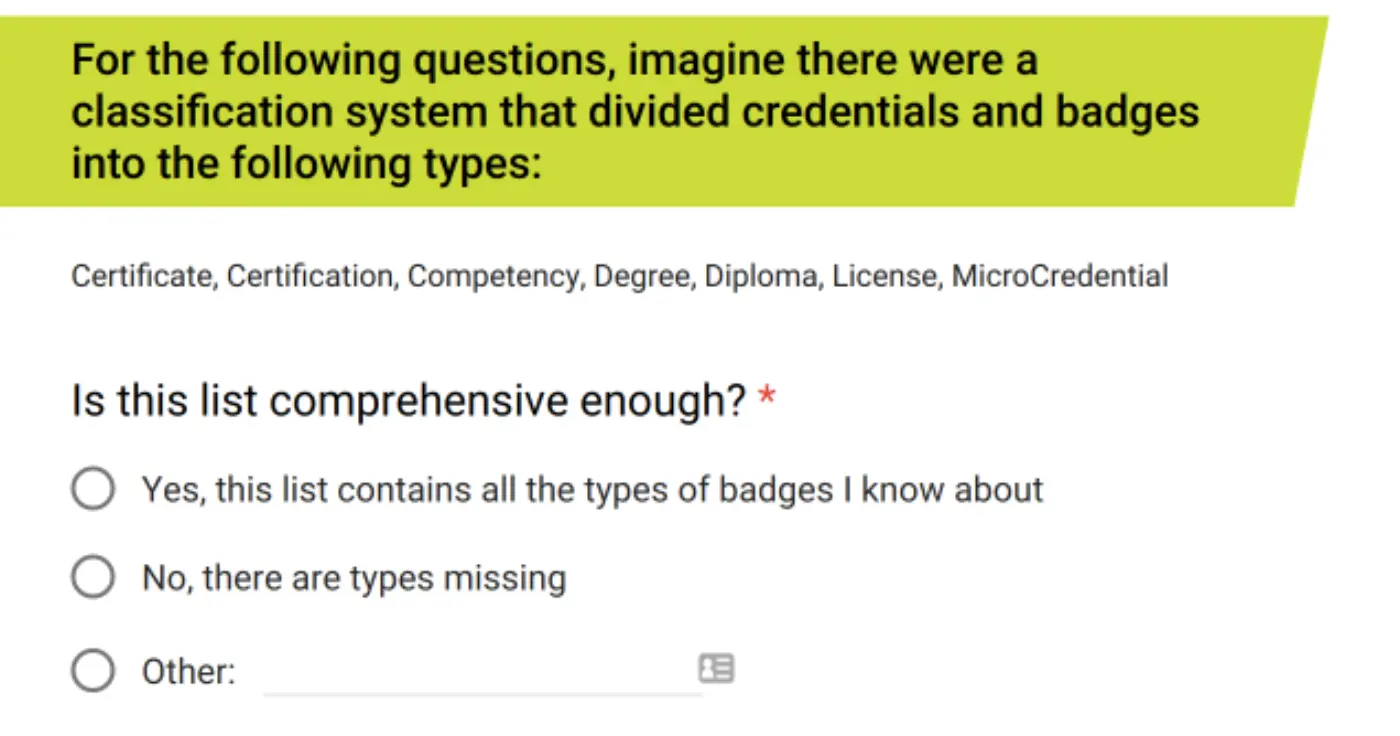
There are all kinds of assumptions baked into this question that need to be unpacked. For example, perhaps the biggest is that all of these have an 'essence' independent of one another, rather than in relation to each other. I see this as an attempt, either consciously or unconsciously, to turn the notion of a 'badge' into what Richard Rorty termed a 'dead metaphor':
Old metaphors are constantly dying off into literalness, and then serving as a platform and a foil for new metaphors. (Contingency, Irony, and Solidarity, 16)
In my doctoral thesis (better consumed as this ebook), I used Rorty's work along with that of William Empson to come up with a 'continuum of ambiguity':
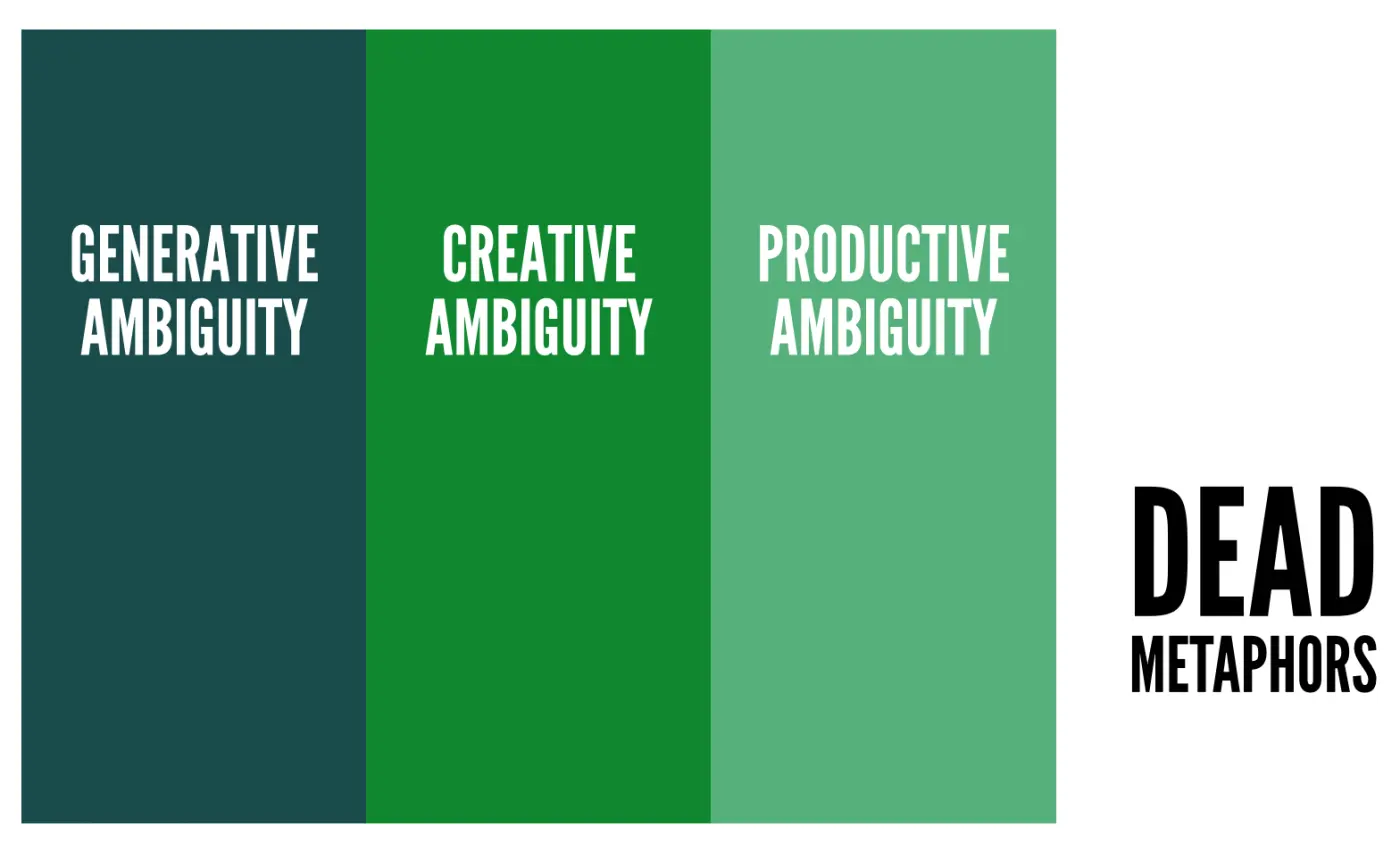
The idea behind this continuum is that almost every term we use to describe 'reality' is metaphorical in some way. Terms we use to refer to things (e.g. 'badge') contain both denotative and connotative aspects meaning that the person using the term cannot be absolutely certain that the person they are communicating with will understand what they mean in the same way.
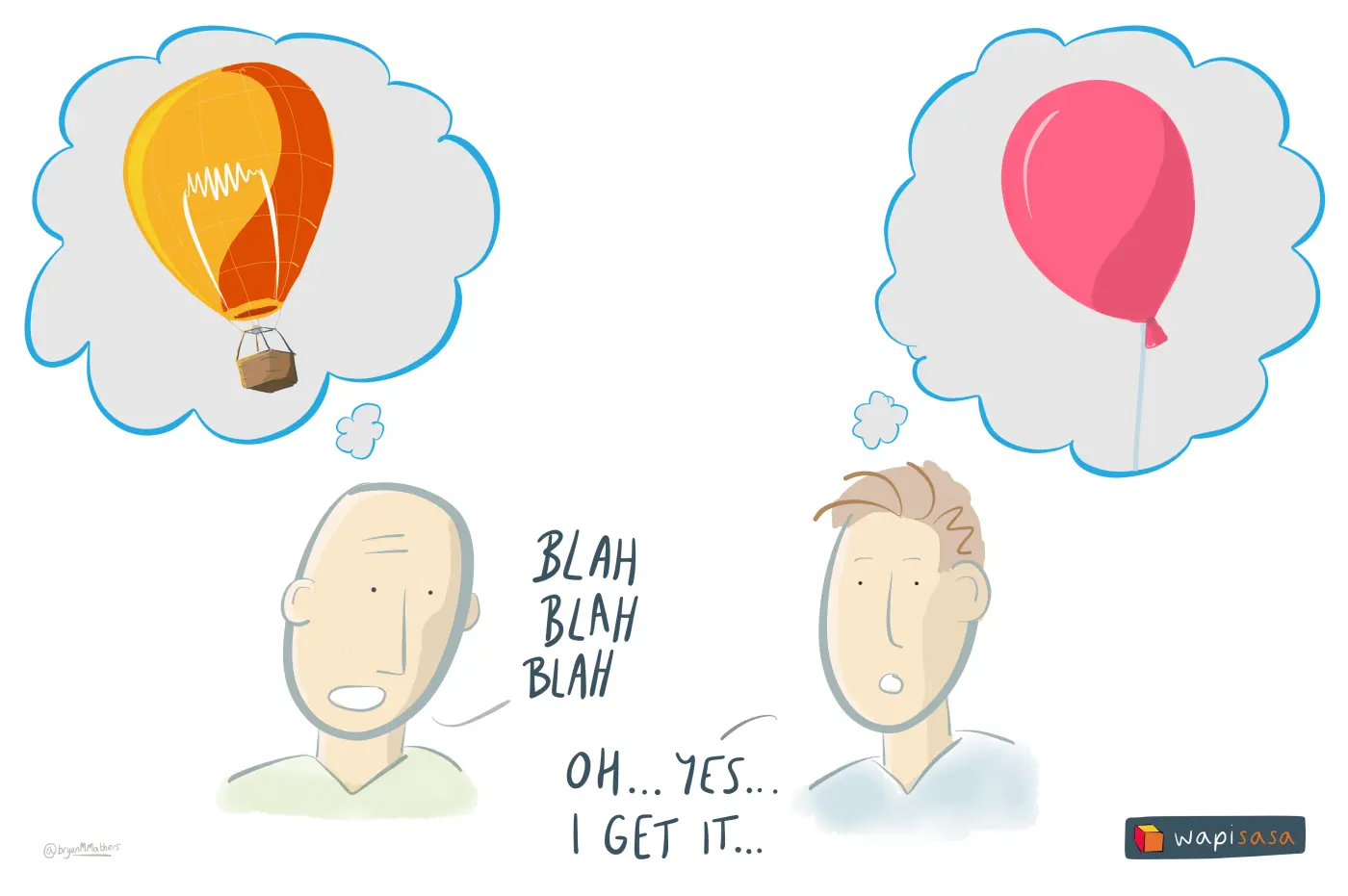
Image CC BY-ND Bryan Mathers
The more we try and create a one-to-one relationship between the utterance and the understanding of it, the more we are in danger of terms 'falling off' the continuum of ambiguity and becoming dead metaphors. They "lose vitality" and are "treated as counters within a social practice, employed correctly or incorrectly." (Objectivity, Relativism, and Truth, 171). Such terms have the status of cliché.
The attempt to create a one-to-one relationship between a term as written or spoken, and the term as it is understood by an interlocutor or reader, is an understandable one. It would do away with the real, everyday problems we're faced with when trying to understand the world from someone else's point of view. As Rorty puts it, "the world does not provide us with any criterion to choose between alternative metaphors" (The Contingency of Language, 6). The problem is that if we have a single ontology, then we have a single worldview.
Returning to Open Badges, it would be difficult to do any interesting and useful work with the term if it becomes a dead metaphor. For example, I'm quite sure that there's nothing many of those in Higher Education would like better than to demarcate what a badge 'counts for' and the situations in which it can be used. After all, organisations that have histories going back hundreds of years, and which are in the game of having a monopoly on 'high-quality' credentials need to protect their back. If they can create a dead metaphor-based ontology in which badges count as something much lower 'quality' (whatever that means) than the degrees they offer, then they can carry on as normal.
The fading conviction originating with Plato that language can adequately represent what there is in words opens the way for a pragmatic utilization of language as a means to address current needs through practical deliberations among thoughtful people. (Internet Encyclopedia of Philosophy)
At this point, I'm tempted to dive into differential ontology and the work of Derrida and Deleuze. Instead I'll simply point out that the reductive attempt to define an essentialist ontology of credentials is doomed from the outset. What we need instead is to ensure that our use of terms such as 'Open Badges' are what I would call 'productively ambiguous' — that is to say, in the Pragmatist tradition, 'good in the way of belief'.
Or, if you like your takeaways more pithy: Keep Badges Weird!