Open Badges and the ambiguity of recognition
When most people think about earning a badge for something, they think about being recognised for that thing. This is correct: badges do in fact signify recognition.
However, most badges are issued for a subset of recognition practices, namely to indicate that something is in some way 'valid'. For example:
- This person completed a course (without cheating)
- This person attended an event
- This person has skills which are useful
Badges of this type are useful, particularly when thinking about people who are in transition. This usually happens when people are looking to land first job, being promoted at work, or looking to move on in their career.
To use my continuum of ambiguity, we can say that validity badges are 'productively ambiguous'. That is to say that most people looking at the badge and its associated metadata will understand what it is for and how it is useful.
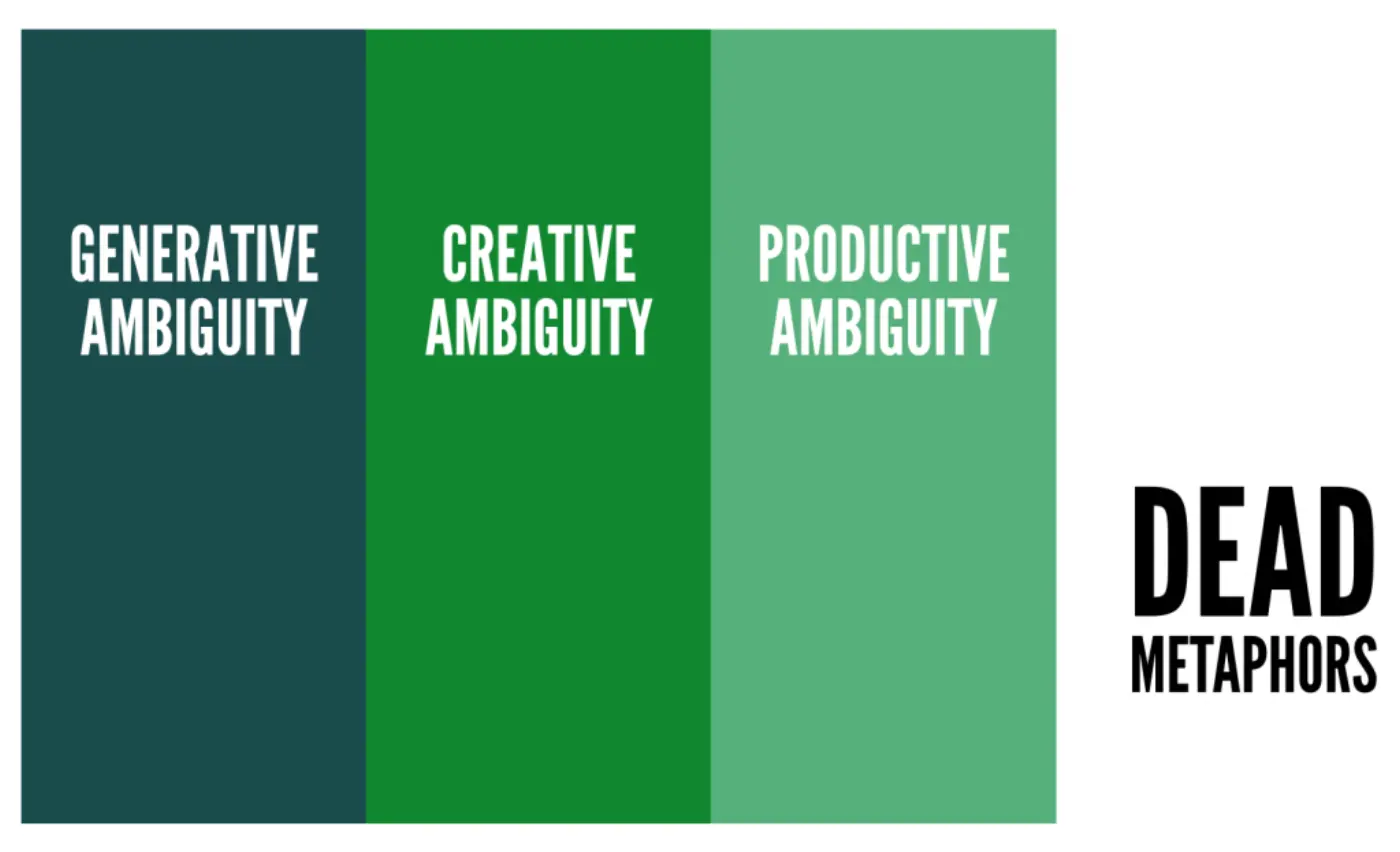
Further to the right, and off the end of the continuum is the danger zone of 'dead metaphors'. In this context, that would apply to badges that validate skills we expect everyone to have.
I want to talk about badges for recognition which fall in the other two parts of the continuum: generative ambiguity and creative ambiguity. After all, we don't only engage in recognition practices to validate other people's skills.
Sometimes we recognise things such as:
- Potential
- Aspiration
- Attention
In fact, sometimes it's enough just to recognise somebody or some thing's existence.
One dictionary definition I came across, among the many I looked at in preparation for this post, defined recognition as being an 'uncountable noun'. In other words, recognition is a quantity which is measured in an undifferentiated unit, rather than being something which can be divided into discrete elements.
Let's return to the two parts of the continuum of ambiguity that I want to discuss in relation to badges:
- Generative ambiguity — badge metadata is used as a symbol for ideas that are very hard to express. If an badge is generatively ambiguous, then it might make sense to you, but not so much to others. (This is OK, as you may want to self-issue it!)
- Creative ambiguity — one part of an idea expressed in the badge metadata is fixed, but the other part has a lot of freedom of movement. If a badge is creatively ambiguous, then other people who share your context might kind of see the value expressed by it. (So, for example, it might only make sense within a given community.)
In my work on digital literacies, I often talk about power dynamics that are at play when people come up with definitions. By naming things we attempt to exert power. There is nothing inherently wrong with this, and productive ambiguity is how we get things done at scale.
But focusing on scale isn't always useful. Our relationships with family, friends, and community members don't always scale. This is why there's been so much discussion of Dunbar's Number over the last 10 years. There may well be a 'cognitive limit' to the number of people with whom we can maintain stable social relationships.
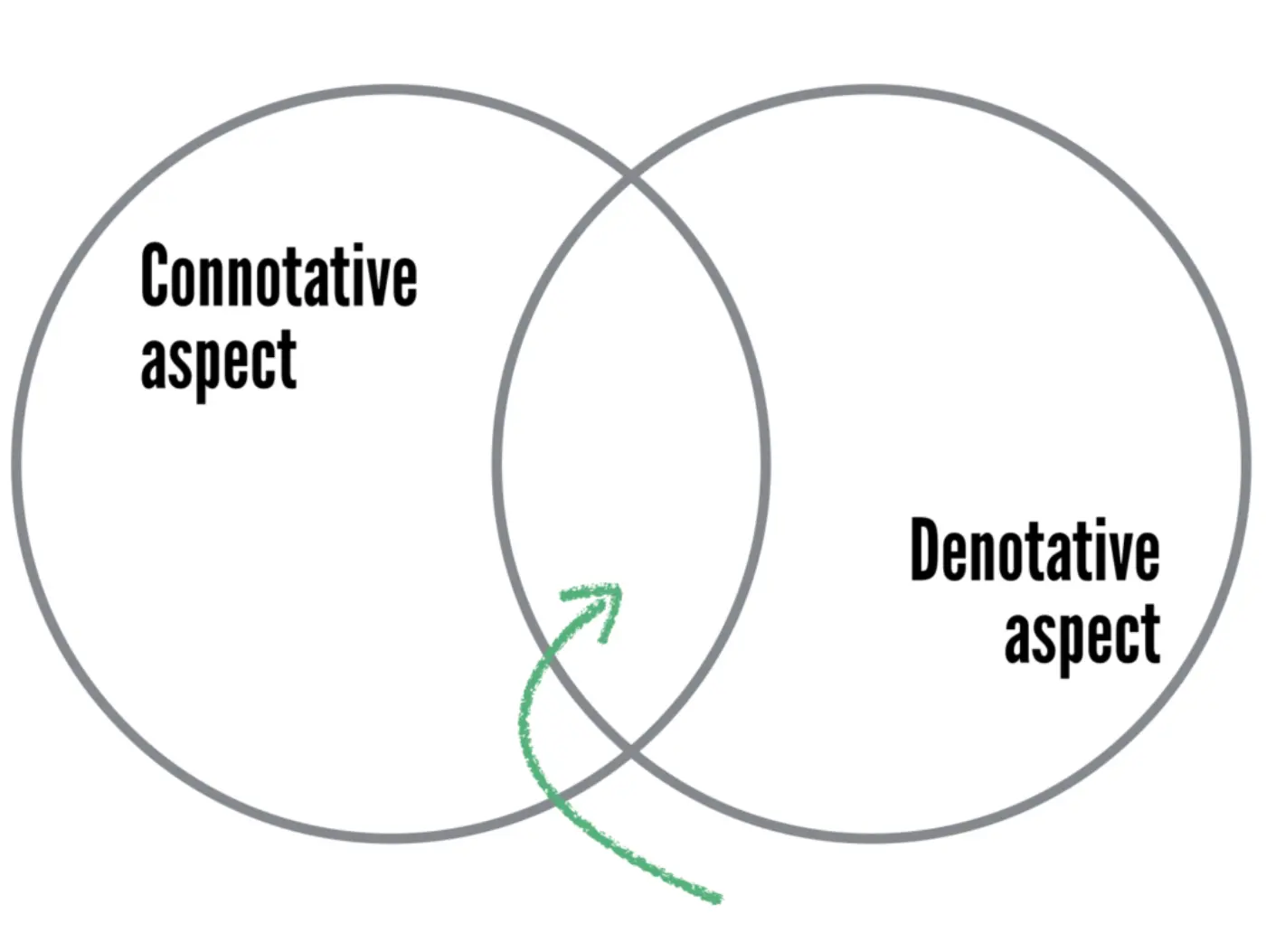
The continuum of ambiguity exists at the overlap of the connotative and denotative aspect of the words we use to convey meaning. If something denotes something else then it 'stands' for it. If something connotes something else then it is indicative of it.
The same is true of badges for recognition practices. Instead of only leaning towards ever more denotative badges, I want to suggest that we leave room for badges that connote relationships, potential, aspiration, and even existence. After all, the most basic form of recognition is: "I see you."