TB871: A complete VSM model of my system of interest
Note: this is a post reflecting on one of the modules of my MSc in Systems Thinking in Practice. You can see all of the related posts in this category.
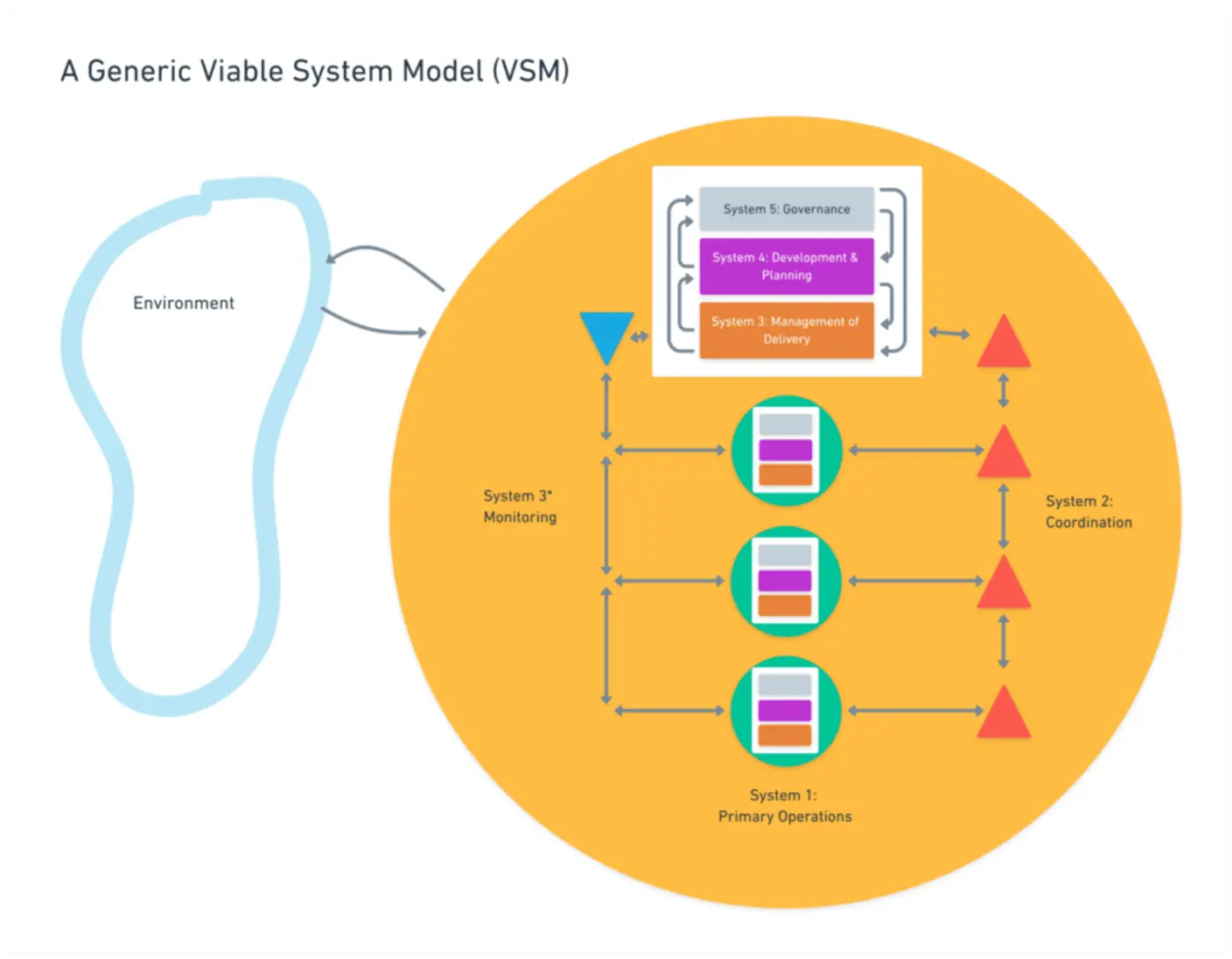
In previous posts, I have defined all five systems of the Viable System Model (VSM) in relation to my system of interest, which is ‘a system to promote lifelong learning’ in a library context:
- System 1
- System 2
- System 3 (and 3*)
- System 4
- System 5
I find VSM diagrams confusing to look at and clunky to produce. Thankfully, I’m not alone in this! In my conversation with Steve Brewis, he said that he tends to put the data straight into MATLAB, and in an exchange with Patrick Hoverstadt (author of the chapter on VSM in the course text) he said he tends to use a table:
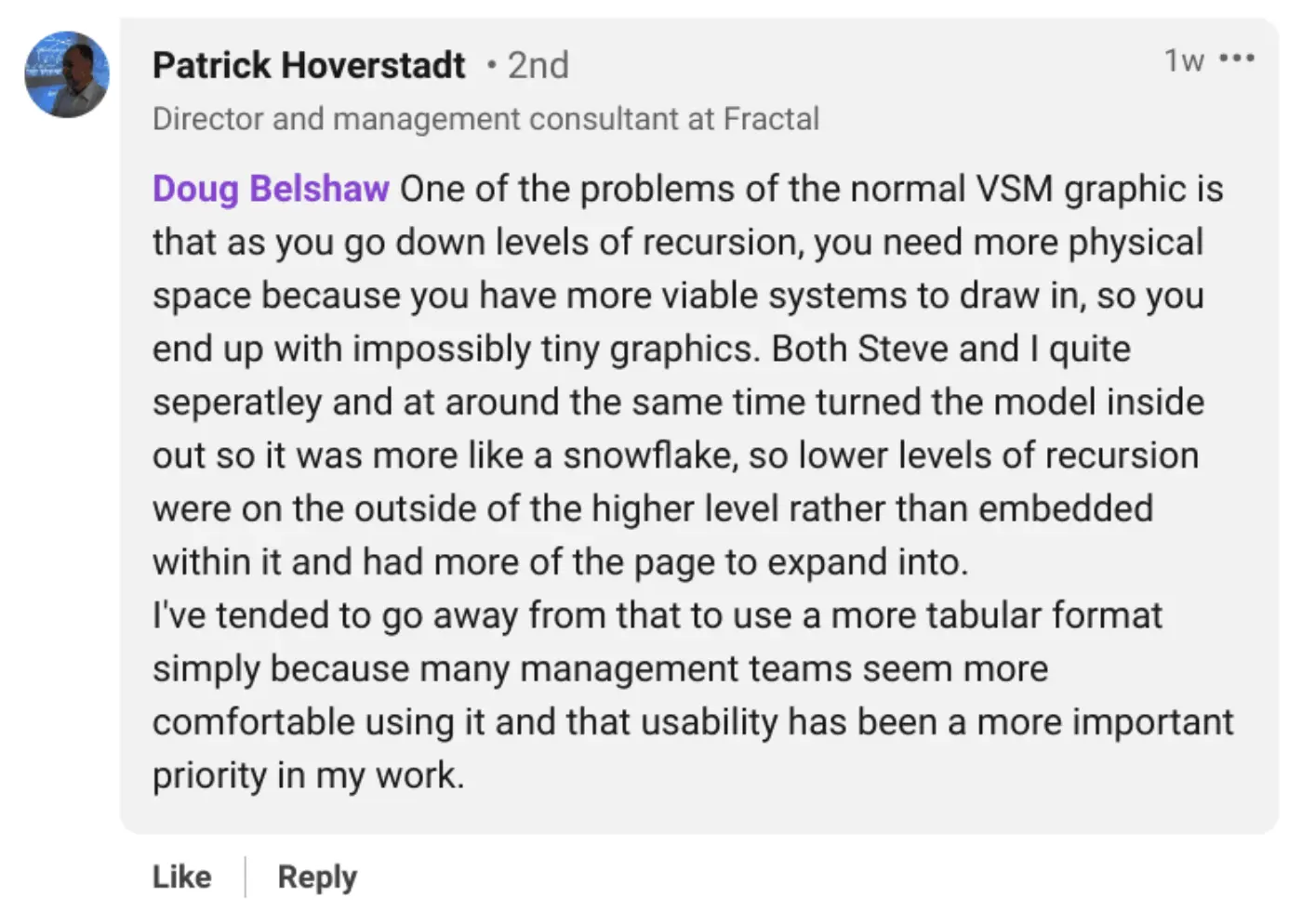
I’m still figuring out the snowflake representation of the VSM, so for now I’m going to represent all five in tabular format.
SystemFunctionComponentsSystem 1: Primary OperationsCore activities or units that perform essential work and produce primary value for the external environmentEducational delivery: Provides high-quality educational programs and courses tailored to the needs of lifelong learners
Technological support: Ensures the technological infrastructure to support e-learning and digital literacy
Learner support: Offers comprehensive assistance to enhance the learning experience and outcomes for learners
Community engagement: Promotes lifelong learning within the community and establishes/sustains partnerships with local organisations and businesses
Evaluation & feedback: Monitors and evaluates the effectiveness of lifelong learning initiatives and incorporates feedback for continuous improvementSystem 2: CoordinationEnsures different operational units (System 1s) work harmoniously without conflictsCommon standards and protocols: Ensures consistency in cataloguing, classification, lending procedures, and managing digital resources
Agreed communication channels: Facilitates effective communication between different parts of the library and external stakeholders
Monitoring and feedback systems: Tracks performance through user surveys, suggestion boxes, and digital feedback forms
Conflict resolution mechanisms: Addresses disputes among staff and between staff and users through clear procedures
Staff training and development: Provides continuous training and professional development opportunities for staff
Coordination with external partners: Manages collaborations with other libraries, educational institutions, and community organisations
Resource allocation/management: Allocates budgets, staff, and equipment effectively across departments and branchesSystem 3: Management of DeliveryOversees and controls the operations, ensuring efficiency and effectivenessAllocating resources: Distributes resources such as books, digital materials, staff, and funding
Monitoring performance: Sets standards, collects data, and analyses results to identify areas for improvement
Implementing policies: Translates high-level policies into actionable plans for operational units
Resolving conflicts: Mediates disputes and manages conflicts of interest between departments
Optimising operations: Continuously improves and streamlines library operationsSystem 3: Monitoring*Independent component performing checks and balancesIndependent audits: Conducts regular reviews to verify the efficient and effective use of resources
Transparency and accountability: Provides unbiased assessments of library operations to maintain high service standards
Feedback for improvement: Offers valuable feedback to inform decisions and guide necessary changesSystem 4: Development and PlanningFocuses on the external environment and future planningEnvironmental scanning: Monitors trends in education, technology, and community needs
External communications: Manages non-operational communications with external stakeholders and promotes lifelong learning initiatives
Innovation: Encourages and implements new ideas and methods to enhance lifelong learning
Managing change: Develops and implements change management plans for new initiatives
Organisational modelling: Maintains a comprehensive model of the library’s operations and its alignment with lifelong learning objectivesSystem 5: GovernanceEnsures the organisation functions cohesively and maintains its identityPolicy development and oversight: Creates policies to promote an inclusive learning environment
Strategic partnerships: Builds and maintains relationships with educational institutions, technology providers, and community organisations
Monitoring and adaptation: Continuously monitors educational trends and adapts programmes and services
Resource allocation: Ensures resources are effectively allocated to support both current operations and future initiatives
In terms of the Environment in which this system operates, it includes the following:
| External Environment | Examples |
|---|---|
| Government policy | Local government policies that support public libraries, national education policies promoting lifelong learning, and grants for digital literacy programs. |
| Legal frameworks | Copyright laws affecting the use of digital resources, data protection regulations for handling user information, and accessibility laws ensuring resources are available to people with disabilities. |
| Economic conditions | Local economic conditions affecting funding and donations, economic downturns leading to increased demand for free educational resources, and partnerships with local businesses for sponsorships. |
| Research funding | Grants from educational foundations for developing new learning programs, government funding for community education projects, and research collaborations with universities. |
| Educational trends | Growing emphasis on STEM education, increasing demand for digital literacy, and trends in adult education focusing on career development and lifelong learning. |
| Technological advances | The introduction of e-books and online learning platforms, advancements in library management systems, and the use of AI for personalised learning experiences. |
| Community needs | Demographic changes such as an aging population requiring new educational programs, community interest in sustainability and environmental education, and feedback from patrons requesting specific resources or services. |
| Stakeholders | Patrons (library users of all ages and backgrounds), educators (teachers, university lecturers, and vocational trainers), local government officials involved in funding and policy-making, and funding bodies providing grants and donations. |
External EnvironmentExamplesGovernment policyLocal government policies that support public libraries, national education policies promoting lifelong learning, and grants for digital literacy programs.Legal frameworksCopyright laws affecting the use of digital resources, data protection regulations for handling user information, and accessibility laws ensuring resources are available to people with disabilities.Economic conditionsLocal economic conditions affecting funding and donations, economic downturns leading to increased demand for free educational resources, and partnerships with local businesses for sponsorships.Research fundingGrants from educational foundations for developing new learning programs, government funding for community education projects, and research collaborations with universities.Educational trendsGrowing emphasis on STEM education, increasing demand for digital literacy, and trends in adult education focusing on career development and lifelong learning.Technological advancesThe introduction of e-books and online learning platforms, advancements in library management systems, and the use of AI for personalised learning experiences.Community needsDemographic changes such as an aging population requiring new educational programs, community interest in sustainability and environmental education, and feedback from patrons requesting specific resources or services.StakeholdersPatrons (library users of all ages and backgrounds), educators (teachers, university lecturers, and vocational trainers), local government officials involved in funding and policy-making, and funding bodies providing grants and donations.
Not included in all of this, of course, is the context in which all of this operates. For example, I’m writing this on the day of a General Election in the UK. The expectation is that we’ll be kicking out a government that instituted austerity and cuts to funding for public services, and replacing it with one which will hopefully channel money away from private pockets and into the public purse. That changes the nature of what libraries can offer, because with more certainty and more funding, virtuous feedback loops start appearing.
| System | Function | Components |
|---|---|---|
| System 1: Primary Operations | Core activities or units that perform essential work and produce primary value for the external environment | Educational delivery: Provides high-quality educational programs and courses tailored to the needs of lifelong learners Technological support: Ensures the technological infrastructure to support e-learning and digital literacy Learner support: Offers comprehensive assistance to enhance the learning experience and outcomes for learners Community engagement: Promotes lifelong learning within the community and establishes/sustains partnerships with local organisations and businesses Evaluation & feedback: Monitors and evaluates the effectiveness of lifelong learning initiatives and incorporates feedback for continuous improvement |
| System 2: Coordination | Ensures different operational units (System 1s) work harmoniously without conflicts | Common standards and protocols: Ensures consistency in cataloguing, classification, lending procedures, and managing digital resources Agreed communication channels: Facilitates effective communication between different parts of the library and external stakeholders Monitoring and feedback systems: Tracks performance through user surveys, suggestion boxes, and digital feedback forms Conflict resolution mechanisms: Addresses disputes among staff and between staff and users through clear procedures Staff training and development: Provides continuous training and professional development opportunities for staff Coordination with external partners: Manages collaborations with other libraries, educational institutions, and community organisations Resource allocation/management: Allocates budgets, staff, and equipment effectively across departments and branches |
| System 3: Management of Delivery | Oversees and controls the operations, ensuring efficiency and effectiveness | Allocating resources: Distributes resources such as books, digital materials, staff, and funding Monitoring performance: Sets standards, collects data, and analyses results to identify areas for improvement Implementing policies: Translates high-level policies into actionable plans for operational units Resolving conflicts: Mediates disputes and manages conflicts of interest between departments Optimising operations: Continuously improves and streamlines library operations |
| System 3: Monitoring* | Independent component performing checks and balances | Independent audits: Conducts regular reviews to verify the efficient and effective use of resources Transparency and accountability: Provides unbiased assessments of library operations to maintain high service standards Feedback for improvement: Offers valuable feedback to inform decisions and guide necessary changes |
| System 4: Development and Planning | Focuses on the external environment and future planning | Environmental scanning: Monitors trends in education, technology, and community needs External communications: Manages non-operational communications with external stakeholders and promotes lifelong learning initiatives Innovation: Encourages and implements new ideas and methods to enhance lifelong learning Managing change: Develops and implements change management plans for new initiatives Organisational modelling: Maintains a comprehensive model of the library’s operations and its alignment with lifelong learning objectives |
| System 5: Governance | Ensures the organisation functions cohesively and maintains its identity | Policy development and oversight: Creates policies to promote an inclusive learning environment Strategic partnerships: Builds and maintains relationships with educational institutions, technology providers, and community organisations Monitoring and adaptation: Continuously monitors educational trends and adapts programmes and services Resource allocation: Ensures resources are effectively allocated to support both current operations and future initiatives |